
Former Pakistan Army Chief Jehangir Karamat was Musharraf's predecessor.
'While in the past elements within the Pakistani security establishment viewed Afghanistan as an essential part of its strategic depth vis-a-vis India, the rapprochement between New Delhi and Islamabad in recent years has made such a policy obsolete.'
Pakistan should have the same access to United States civilian nuclear technology that President George W Bush has proposed for India, according to Jehangir Karamat, Pakistan's ambassador to the United States.

India and Pakistan made "considerable progress" on resolving the Kashmir issue between 2004 and 2007 and considered several options, including demilitarisation and granting autonomy to the area, Pakistan's former army chief said on Wednesday.
For the first time, representatives from India and Pakistan have been invited to the meeting of the newly constituted International Nuclear Disarmament Commission, which is working towards rectifying the NPT to make it more acceptable.
Pakistan, which is expected to get the first delivery of two F-16 fighters by the year-end, has said that it was negotiating with the US for 75 more aircraft.
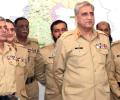
Senior general refuses to retire, reveals Rana Banerji, who headed the Pakistan desk at the Research and Ananlysis Wing, India's external intelligence agency.

If General Asim Munir, Pakistan's new army chief, wants to help defuse the current polarised atmosphere and shepherd civilian politicians towards negotiations on an acceptable date for elections, he may need to distance himself from any perception of needless hostility to Imran Khan, explains Rana Banerji, who headed the Pakistan desk at RA&W, India's external intelligence agency.

Gen Sharif had earlier promised to bow out at the end of his term in November this year.

Chastened by the Kargil conflict, Pervez Musharraf will be remembered for gradually lowering the profile of terrorism and seeking a realistically negotiated settlement to the issue of Jammu and Kashmir, notes Ambassador G Parthasarathy, who served as India's high commissioner to Pakistan when Musharraf seized power in a coup in October 1999.
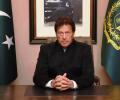
India cannot afford to be complacent about a possible Pakistan resort to military options across the LoC, warns Rana Banerji, who headed the Pakistan desk at the Research and Analysis Wing, India's external intelligence agency.
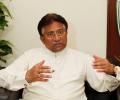
Learning perhaps from the Kargil debacle, Musharraf tried hard to evolve as a statesman in his dealings with India, recalls Rana Banerji, who headed the Pakistan desk at RA&W.

'General Bajwa is believed to consider the internal threats to Pakistan's security as far more serious than the bogey of the Indian threat.' 'This doesn't mean that he is soft on India, only that he is more rational and sensible than his predecessor who had a bit of a chip on his shoulder about India,' points out Pakistan expert Sushant Sareen.
 © 2026 Rediff.com - Advertise with us - Disclaimer - Privacy Policy - Sitemap - Feedback - About us - Terms of use - Grievances